Why I’m vegan, and think other Christians should be too
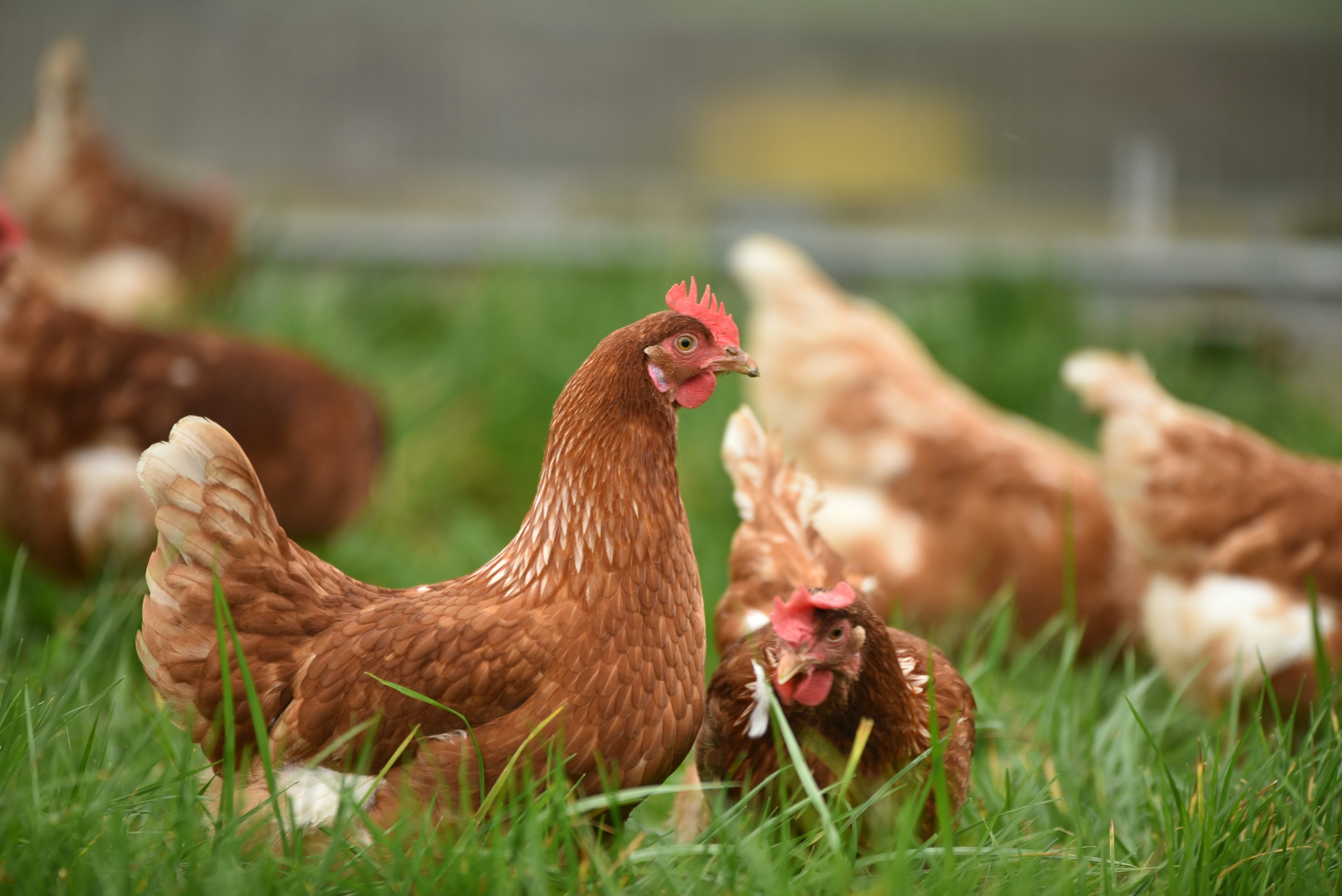
A righteous man regards the life of his beast.
Introduction
I’m Christian and vegan. I think other Christians should be too, specifically if they are in a similar position as me—in a wealthy country with access to big supermarkets. My core argument is narrower than veganism itself: Christians should not fund factory farming, because it abuses the dominion God gave us. Veganism is simply a well-known principled way for a single person to act on this argument.
The first thing someone will often ask when I say I am vegan is “why?” and “for how long?” followed by a lot more questions and objections. I ate meat for most of my life. In my freshman year I read the book Eating Animals by Jonathan Safran Foer for a college class. The ideas percolated in my mind for the next few years and I debated animal ethics frequently with college friends, and later family, until eventually I could see no more good objections to going vegan. I went vegan cold turkey in 2020 (I was already a Christian). Over the last six years in conservative baptist circles in Texas, I’ve defended this choice to many skeptical Christians.
In 2021, I wrote an essay titled “How should Christians view animals?” The essay was intentionally short and did not address many objections, and there are things I would write differently today.1In the original essay I tried to first build up a theological reasoning for caring about animals and place a high view on God’s creation and our stewardship, then followed by pointing out our abuses of that stewardship. Then I talked about how context matters, but I think this part was a bit simplistic. This current essay reflects my current thinking. The purpose of this post is to offer more refined thoughts and clarifications on the intersection of Christianity and veganism. I will refer to this Christian–vegan theology as “my position” from here on for simplicity. I’ll first define some terms and methods I’m using in this essay, and then respond to some objections. This is a long post, but half of it is taken up by appendices and footnotes, where I explain more and link to sources backing my claims.2I may update this post periodically if I hear objections that I think warrant addressing. Also, the version on my personal site will remain the most up-to-date rather than Substack.
This footnote will be a changelog for any significant updates.
• 10-06-2026 Added a footnote in Appendix I regarding Hebrew translation of blessings.
Definitions
When I say “Christian” I simply refer to someone that believes the gospel and that believes that the Bible contains moral instructions we can and should follow. I don’t think my core argument relies on controversial premises, nor necessitates any specific denominational or hermeneutical methods. It simply follows widely shared views to what I take to be their logical conclusion.3To be clear, my more speculative appendices and footnotes are not part of the core argument.
I will use the official definition of “vegan” from the Vegan Society:
Veganism is a philosophy and way of living which seeks to exclude—as far as is possible and practicable—all forms of exploitation of, and cruelty to, animals for food, clothing or any other purpose; and by extension, promotes the development and use of animal-free alternatives for the benefit of animals, humans and the environment. In dietary terms it denotes the practice of dispensing with all products derived wholly or partly from animals.4The Vegan Society, “Definition of veganism.”
My position is not a totalizing worldview, and as I hope to make clear, the aim is simply to live an ordinary Christian life where one also tries to minimize as much animal suffering as one can.
The argument
Nowadays, in conversation, I usually explain my position to Christians like this:
Humans were created in the image of God. God gives humans a command to subdue the earth and have dominion over the animals. We are like his stewards on this earth, with a temporary authority in this world, taking care of the earth which belongs to him. Over the course of history this has taken many forms, like farming and eating meat and riding camels, all that. And there are also guardrails God gave us in dealing with animals. God cares about animals as his creation, so we are meant to be good stewards of animals and their lives. This does not mean that we cannot use them for our own purposes, but that when we do, we should do so with care and respect, and appreciation to God for his provision. Unfortunately our modern industrialized world has led to an increase in extremely inhumane practices, specifically factory farms. Factory farms are very harmful. Thankfully, one benefit of our modern world is that there are also plenty of alternatives to almost any kind of animal product. When an alternative (like let’s say beans instead of meat) is widely available, does not harm animals, and is an adequate substitute, the choice becomes clear. I choose to follow a vegan lifestyle, as far as is possible and practicable, because it avoids supporting factory farming and other practices that harm animals at very little personal cost.
If all of this is sound reasoning, then other Christians might also come to the same conclusion—if they understand certain realities about factory farming and slaughterhouses today—that consuming factory-farmed meat is wrong.
A note on disagreement
Veganism and Christianity are both ideas that stir lots of emotions. Both can be totalizing in some ways and sometimes even fanatical. Linking a philosophy like veganism to Christianity is a tricky thing to do, because I risk alienating both vegans and Christians for corrupting one or the other. I want to be clear. Veganism, like the definition provided above stated, is merely a philosophy of reducing harms to animals.
For some Christians, eating meat may be culturally important, and by me bringing up things like factory farming and pointing to abuses of our dominion, might stir up strong emotions. For that reason I am trying to be fairly reasoned in this essay, and want to emphasize that I don’t think people that eat meat are bad people (any more than the sense that we are all broken people). Though I do think that with a certain level of awareness of injustice, people can become more responsible to act as they learn about a topic.5There is a term called the “green pill” like the red pill from The Matrix, which describes learning about animal exploitation and then seeing it all around you—like seeing the world with green-tinted glasses where all of a sudden all the myriad ways humans abuse and exploit animals becomes so much more clear and you feel like you have to do something about it.
Gavin Ortlund in his book The Art of Disagreeing discusses five virtues that are useful for healthy disagreement, especially among Christians: kindness, courage, listening, persuasion, and love. In his chapter on persuasion, he writes:
When we are in the heat of a disagreement, it is easy for emotion to cloud our ability to think logically. It is often helpful to pause, pull back from whatever we are feeling, and deliberately focus on facts and evidence. A calm, simple assertion of fact can bring clarity among ambiguity, reduce the interpersonal pressure in a disagreement, and increase the other party’s responsibility to interact with what you have said. When doing this, it helps to be honest about the disagreements. Don’t beat around the bush. Bring the disagreement into the light, but do so calmly. […] Calmly wading through a disagreement to identify where the real fault lines of difference lie often brings clarification.6Gavin Ortlund, The Art of Disagreeing: How to Keep Calm and Stay Friends in Hard Conversations (Charlotte, NC: The Good Book Company, 2025), 81.
I want to recognize that many people find the topic of veganism difficult. And I have often experienced others getting emotional when discussing it (and I can too). So in an attempt to follow Ortlund’s advice, I want to go further and explain exactly some of the mechanisms I will use to do this.
When disagreeing on a sensitive topic it might be easy to get caught up with endless questions that are not going to change anyone’s mind. The stated objections are not always the operative ones. When discussing a position, it is crucial to identify the true rejection of a person objecting to it.7More here: Eliezer Yudkowsky, “Is That Your True Rejection?” A true rejection is one which, if resolved, would actually satisfy the objecting interlocutor, and not be followed by further unrelated objections (one may have many true rejections, and that’s okay).8It helps to acknowledge when a specific objection has been answered successfully, before moving on to the next. See Scott Alexander, “‘But’ vs. ‘Yes, But’” (2025). Basically, this is identifying the real reason for why two people disagree. There can be side issues, like a disagreement on the framing of the question, or semantics, or on means when both sides have the same ends. But it’s important to investigate which claims both sides of a disagreement are actually hinging their arguments on.
Also useful here is understanding the Toulmin Method—arguments are composed of a claim, grounds, and qualifier.9There is also warrant and backing, but I am omitting those. For more on this see: Purdue OWL, “Toulmin Argument.” These are also helpful for identifying the double crux of an argument—a statement, which, once examined thoroughly to both sides’ satisfaction, would change the mind of either side based on the evidence.10More here: Duncan Sabien, “Double Crux — A Strategy for Mutual Understanding.” You can also think of this question as “what would change your mind?” If the empirics (basically, diving into the research and evidence) lead toward Person A’s position, Person B will change their mind on the statement, and vice versa. Resolving a double crux with empirical research can be done together, maybe with the help of another person or an AI to judge the trustworthiness and veracity of sources.
So to restate my narrower argument with these more precise tools it might be:
I am morally opposed to factory farms which involve immense levels of animal cruelty and brutality, and an abuse of humanity’s God-given dominion and stewardship over animals. Given that I live in a place and time where factory-farmed animal products comprise the overwhelming majority of animal products, that the exceptions are hard to reliably identify and easy to rationalize in the moment, and that I have easy access to supermarkets with plenty of adequate alternatives, I think purchasing and funding animal products is wrong. A vegan lifestyle, as far as is possible and practical, is the most reliable and consistent way to live this out.
Notice that my argument now hinges on a few things: my time and place, the existence of alternatives, the difficulty of reliably identifying ethical exceptions, the badness of factory farms, and the fact that I believe humans are supposed to care for animals. Any one of these premises is a potential point of disagreement. If I happen to be wrong about the badness of factory farms, and it is shown to me that they are not that bad, and farmed animals actually enjoy their lives so there’s nothing concerning, then I would have to acknowledge this undermines the grounds of my claim. If for another person the qualifier of my argument were not true for them (to use the canonical exception: an indigenous Inuit in the Arctic that must hunt all their food), then the claim also would not hold for them.
It’s also important to recognize what I am not staking my claim on, like animal souls or whether animal welfare can be measured. There may be exegetical (e.g., dominion as benevolent stewardship) or empirical (e.g., animals are sentient) claims that can be engaged with. I believe the core argument survives because it relies on straightforward, widely agreed-upon premises. I also address several objections that are not necessarily defeaters to my argument.
Anyway, I hope these tools can help one understand how I’m reasoning about my position and help anyone in engaging in disagreements.11I may expand on these thoughts in a future essay dedicated to healthy Christian disagreement. With that in place, here are five common objections, in rough order of how often I hear them, and my responses.
Objection 1. What about hunting, or ethically farmed meat?
I will answer this first because it is the most common one I receive in most of my conversations with other Christians. From here on I’ll use the acronym HEPAP for Hunted or Ethically Produced Animal Products. Specifically, HEPAP will refer to the kinds of animal products that I would say are allowable from my position: use of animals that are in line with the way people in biblical times used animals (like subsistence farming), or how I would expect Jesus might use animals. So truly ethically raised and humanely slaughtered meat, eggs, dairy could all count.
First, a short answer and concession: Yes, if you only eat HEPAP, my position permits it!
Now, if that was a person’s true rejection, then even with this concession we could agree that all non-HEPAP products available are unethical and should not be consumed! The bad news is that non-HEPAP products make up the vast majority of animal products. Roughly 99% of farmed animals in the United States are raised in factory farms.12Sentience Institute, “US Factory Farming Estimates.” True ethical meat is very hard to find, so even an allowance under my position would preclude basically all meat eating for most people.
I have met people who hunt or have farms, but I have never met a person that does not also eat meat at restaurants often or also buy meat from the local supermarket—which is basically guaranteed to be factory-farmed. If I can assume you, reader, are like most of the people I come across, you do not eat exclusively meat that you hunted yourself.13If I ever do meet this person, I would have to say honestly, “Wow, that’s really cool. I guess my argument for veganism does not apply to you.” Debating the merits of eating animals requires grappling with how most meat is actually produced, not just the idealistic edge cases reality. HEPAP does fit in my position, but an appeal to (the existence of) the rare exception cannot negate the rule.14See also special pleading. Also related: red herring.
It’s totally possible someone is just asking this question out of curiosity—do I make these exceptions? But that is not usually the case—I usually see it presented as an objection.
In case this is still unclear, I’ll use an example that many Christians might be able to identify with: abortion debates. (This should go without saying but by making this comparison, I am not trying to compare humans and animals, but only the type of argument—more on this in the note on commensurability below.) In the US, anti-abortion advocates are often exasperated by all the time and energy they have to exert to debate the wrongness of abortion even in the case of rape or incest. This is because only 2% of abortions are a result of rape or incest.15Nate Hochman, “A Rape and Incest Exemption Would Still Ban More Than 98 Percent of Abortions,” (2022). Yet most of the abortion conversation ends up on those scenarios, despite it being a tiny fraction of abortions, because the pro-choice case is easier to make based on those scenarios.16Edge cases are obviously useful in helping think about topics and are especially useful when someone is making absolute claims, to maybe point a reductio ad absurdum. But I think that’s different.
One more example for Christians. When talking about the goodness of God and the need for missions and evangelism, atheists might point to a young kid on a remote island who dies at 3 years old—why should he be held responsible for his actions? That’s a genuinely difficult case that raises all sorts of questions like original sin and the age of accountability, but also, a productive conversation requires moving past certain edge cases.
Now, veganism can make exceptions as well, but it is baked into the definition of veganism itself—“as far as is possible and practicable.” This would cover things like traveling in an area where vegan food is very hard to find. These exceptions are made ahead of time. I think when a person says that they will try to eat only HEPAP, they probably have good intentions. But without a guiding principle, they will likely drift and make continuous spur-of-the-moment exceptions for dinner at a friend’s, or restaurants, or whenever in a hurry.17Obligatory Carl Schmitt: “Sovereign is he who decides on the exception.” Carl Schmitt, Political Theology, 5. A commitment like veganism seems to be the most reliable way to live out the intention.
One common response to this is: “well isn’t it pretty easy to get HEPAP if I go to Whole Foods and stuff like that?” No, not really. Labels are disappointingly unreliable. Labels like organic, free range, etc., are mostly marketing, and in practice not as great as they might sound.18See: PETA, “Free-Range and Organic Meat, Eggs, and Dairy Products: Conning Consumers?”; CATO Institute, “The USDA’s Meaningless Organic Label” (2016); Farm Sanctuary, “The Truth Behind 'Humane Labels'.” Also, even for some larger animals, their lives might have been mostly peaceful, but the methods of killing animals in modern slaughterhouses are still brutal. Unfortunately, it is probably much harder than the average person thinks to find genuine HEPAP.
1.1. Is factory farming actually that bad?
Yes. I believe it amounts to animal cruelty on a mass scale. Factory farming also has a large human cost.19The human cost (labor abuse, overuse of antibiotics, pandemic risks, environmental pollution, etc.) is well-documented. See: The Humane League, “This is How the Factory Farm Industry Exploits and Endangers Workers”; and ASPCA, “Factory Farming Hurts People and Communities”; and Jonathan Anomaly, “What's Wrong With Factory Farming?,” Public health ethics vol. 8,3 (2015): 246-254. doi:10.1093/phe/phu001. This is an empirical issue that one can research and learn more about—this can be considered the double crux of my claim that I mentioned earlier. The evidence for this is abundant and well-documented and the following footnote contains some more backing.20It seems that most people who investigate the issue for themselves end up agreeing on the badness of factory farms. Most people I meet don’t even want to start looking into it because they believe they’ll be morally disgusted or scarred. That intuition should tell us something.
You can watch the documentary Dominion, or read any number of books (see appendix for resources) that describe what goes on inside factory farms. For a brief review of the atrocities, you can see the following posts:
Benjamin Hilton, “Factory farming” (2024).
Dustin Crummett, “Animal Cruelty - Full Report.”
Matthew Adelstein’s series of articles: “May The Factory Farms Burn” (2022); “Factory Farming Is Not Just Bad: It’s the Worst Thing Ever” (2023); “We've Created Hell. It's Called Factory Farming” (2023); “The Bone-Chilling Evil of Factory Farming” (2025).
If someone honestly comes away after genuinely researching these things with the opinion that factory farming is not horrific, then we’ve likely found the real crux. I wonder what we see differently: the evidence, or our responsibility toward animals?
Given the difficulty of finding and sticking to HEPAP, and the overwhelming majority of meat being factory-farmed meat—this has to be the focus of the discussion. We must not look past it. As they say: Meat Eating Discussions Should Basically Only Be About Factory Farming.
Objection 2. What about our dominion? Didn’t God give us animals for us to use?
Yes, God did give us dominion over animals!
In Genesis, God tells Adam and Eve: “Be fruitful and multiply, and fill the earth and subdue it; rule over the fish of the sea and the birds of the air and every creature that crawls upon the earth” (Gen. 1:28).
What does that dominion actually mean? Now, there may be a rich debate to be had about what dominion actually means. Do they imply a benevolent stewardship or harsh rule? This can become a legitimate interpretive question. The Hebrew words radah (dominion) and kabash (subdue) have very interesting definitions and other usages. The word radah is used with other descriptors that make it harsh (“with rigor” in Lev. 25:43, 46 or “with force and with harshness” in Ezek. 34:4), which would be redundant if it naturally meant a harsh rule. Kabash is legitimately a word used in contexts of conquest, slavery, or assault (Num. 32:22, 29; Jer. 34:11, 16; Esth. 7:8; Neh. 5:5). Psalm 72 is a royal prayer that describes the dual nature of ancient kingship as both harsh and charged with care for the poor.21See Michael R. Stead, “‘To Rule’ and ‘To Subdue’ in Genesis 1,” St Mark’s Review (May 2010), No.212, 13–24. Finally, in 1 Corinthians Paul says “For ‘God has put everything under [Jesus’s] feet.’ Now when it says that everything has been put under Him, this clearly does not include the One who put everything under Him” (1 Cor. 15:27). That and Hebrews 2:6–9 both add a christological reading of dominion (“God subjected all things to him”)—if Jesus is understood to have dominion, then we would hope his dominion over all of creation is one of benevolent stewardship. This to me implies that this rule is more like other authority structures in creation, such as citizens submitting to government and children submitting to parents. In these cases the ruler, or the one with authority over others, is also given explicit instructions to care for the welfare of those they are in charge of. The one with authority considers the interests of their subjects—like Jesus does for creation. We can also look to theologians who have considered what God’s gift of dominion means.
John Calvin wrote in his commentary on Genesis:
[The] custody of the garden was given in charge to Adam, to show that we possess the things which God has committed to our hands, on the condition, that being content with a frugal and moderate use of them, we should take care of what shall remain. Let him who possesses a field, so partake of its yearly fruits, that he may not suffer the ground to be injured by his negligence; but let him endeavor to hand it down to posterity as he received it, or even better cultivated. Let him so feed on its fruits that he neither dissipates it by luxury, nor permits to be marred or ruined by neglect. Moreover, that this economy, and this diligence, with respect to those good things which God has given us to enjoy, may flourish among us; let every one regard himself as the steward of God in all things which he possesses. Then he will neither conduct himself dissolutely, nor corrupt by abuse those things which God requires to be preserved.22John Calvin, Commentary on Genesis, 2:15.
Francis Schaeffer wrote on dominion:
So fallen man has dominion over nature, but he uses it wrongly. The Christian is called upon to exhibit this dominion, but to exhibit it rightly: treating the thing as having value in itself, exercising dominion without being destructive.23Francis A. Schaeffer, Pollution and the Death of Man: The Christian View of Ecology (Wheaton, IL: Tyndale House, 1970), 72.
We have the right to rid our houses of ants; but what we have no right to do is to forget to honor the ant as God made it, out in the place where God made the ant to be. When we meet the ant on the sidewalk, we step over him. He is a creature, like ourselves; not made in the image of God, it is true, but equal with man as far as creation is concerned. The ant and the man are both creatures.24Schaeffer, Pollution and the Death of Man, 43.
Pope Francis wrote in Laudato si':
We are not God. The earth was here before us and it has been given to us. This allows us to respond to the charge that Judaeo-Christian thinking, on the basis of the Genesis account which grants man “dominion” over the earth (cf. Gen 1:28), has encouraged the unbridled exploitation of nature by painting him as domineering and destructive by nature. This is not a correct interpretation of the Bible as understood by the Church. Although it is true that we Christians have at times incorrectly interpreted the Scriptures, nowadays we must forcefully reject the notion that our being created in God’s image and given dominion over the earth justifies absolute domination over other creatures. The biblical texts are to be read in their context, with an appropriate hermeneutic, recognizing that they tell us to “till and keep” the garden of the world (cf. Gen 2:15). “Tilling” refers to cultivating, ploughing or working, while “keeping” means caring, protecting, overseeing and preserving. This implies a relationship of mutual responsibility between human beings and nature. Each community can take from the bounty of the earth whatever it needs for subsistence, but it also has the duty to protect the earth and to ensure its fruitfulness for coming generations. “The earth is the Lord’s” (Ps 24:1); to him belongs “the earth with all that is within it” (Dt 10:14). Thus God rejects every claim to absolute ownership: “The land shall not be sold in perpetuity, for the land is mine; for you are strangers and sojourners with me” (Lev 25:23).25Pope Francis, Laudato si' (2015), paragraph 67.
In 2015, a group of evangelical Christians including Andrew T. Walker and Al Mohler of the Southern Baptist Convention signed a statement called Every Living Thing: An Evangelical Statement on Responsible Care for Animals, which calls for responsible stewardship and says:
We believe all creation, including animals, will be set free from its slavery to corruption into the freedom of the glory of the children of God; that God will bring all things in heaven and on earth together under one head, Jesus the Christ; and through the Lord Jesus Christ will bring about a new heaven and a new earth that will reflect right relationships in all of creation, including between humans and animals. […]
We understand from Scripture the responsible rule over and care of animals that God has given us on His behalf, and that this rule is to reflect His rule and character. This responsible rule and compassionate care of animals is expressed in God’s instruction to His people in His word, regarding the right treatment of animals, and that the principles behind these instructions, rooted in the unchanging character of God, still apply today.
[Ex. 23:4-5, 19, 34:26; Lv. 22:26-28, Lv. 25:7; Dt. 22:1-4, 6-7; 25:4]26“Every Living Thing statement.”
These quotations view the dominion that God gave us as one of temporary authority, as vice-kings, over the whole world. We are stewards in the sense that this world does not belong to us but we have been given rule over it, until God takes it back. This seems like a much more natural understanding of dominion than an anything-goes approach, which we would never apply universally. This view of dominion implies that we are to use our authority responsibly, which includes showing care for creation. This is further bolstered by positive scriptural evidence for God’s care of animals.27See the verses in the quotations above. See also Charles Camosy, For Love of Animals: Christian Ethics, Consistent Action, 44–60.
See more specific commands about care for animals in this article: Vesa Hautala, “Should Christians be concerned about animal welfare? (Part 4)” (2022); and Vesa Hautala, “Does Jesus care about fish pain?” (2026).
While this view of dominion permits HEPAP, the brutality of factory farming is surely excessive. To quote my old essay:
If Jesus visited a modern slaughterhouse, filled with animals we’ve bred into captivity only to slaughter, do we think he’d compliment us on our ingenuity and ruthless efficiencies? Is that what he meant by dominion? I think the answer is clearly no.28Andrés Morales, “How should Christians view animals?” (2021).
Objection 3. What if animals don’t feel pain?
Here is another crux for my argument. I believe animals are capable of feeling emotions like happiness and suffering. It’s a belief I’ve held most of my life even subconsciously because I find it intuitive. I think most people that have interacted with animals like cats and dogs can understand this as well.
The ability to feel pain is sentience. Sentience is defined as “the capacity to have positive and negative experiences, usually thought of as happiness and suffering.”29Jacy Reece Anthis, “What is sentience?” (2018). I believe it’s clear that animals are sentient beings. To me personally, some of the most clear evidence for animals feeling pain is that the same painkillers that work for humans also work for animals. And this extends even to anti-anxiety and anti-depression medications. The same chemicals that alter our own mental states alter theirs in the same way.30See FDA, “Get the Facts about Pain Relievers for Pets”; and My Pet Nutritionist, “How Do Pain Medications Work In Pets?” (2022); and Carlyn Zwarenstein, “How naturally-produced opioids help plumb the depths of animal minds” (2024). Modern research has actually backed up animal sentience quite strongly. There are several labs and institutes and groups of researchers that study how animals behave and have put out declarations stating that science does point to animals being sentient.31For example, Cambridge Declaration on Consciousness (2012), Montreal Declaration on Animal Exploitation (2022), New York Declaration on Animal Consciousness (2024).
See also: Helen S Proctor et al., “Searching for Animal Sentience: A Systematic Review of the Scientific Literature,” Animals: an open access journal from MDPI vol. 3,3 882-906. 4 Sep. 2013, doi:10.3390/ani3030882.
The 2024 New York Declaration on Animal Consciousness states:
Which animals have the capacity for conscious experience? While much uncertainty remains, some points of wide agreement have emerged.
First, there is strong scientific support for attributions of conscious experience to other mammals and to birds.
Second, the empirical evidence indicates at least a realistic possibility of conscious experience in all vertebrates (including reptiles, amphibians, and fishes) and many invertebrates (including, at minimum, cephalopod mollusks, decapod crustaceans, and insects).
Third, when there is a realistic possibility of conscious experience in an animal, it is irresponsible to ignore that possibility in decisions affecting that animal. We should consider welfare risks and use the evidence to inform our responses to these risks.32Kristin Andrews et al., “The New York Declaration on Animal Consciousness” (2024).
For more on other potentially-sentient beings, see Jonathan Birch, The Edge of Sentience: Risk and Precaution in Humans, Other Animals, and AI (Oxford: Oxford University Press, 2024).
The more we study animals, the more we realize they are also surprisingly complex creatures, and we are surprisingly similar to them. Animals are pointed to in the Bible several times as exemplars of intelligence or determination (Prov. 6:6; 30:24−28). This also matches what we see in research regarding animal cognition, that some animals possess high levels of intelligence.33See the background page of the New York Declaration for evidences. More examples here: The Humane League, “Animal Intelligence: The Smartest Animals in the World” (2025).
For more on animal minds, see Marc Bekoff, The Emotional Lives of Animals: A Leading Scientist Explores Animal Joy, Sorrow, and Empathy—and Why They Matter (Novato, CA: New World Library, 2007); and Susana Monsó, Playing Possum: How Animals Understand Death (Princeton, NJ: Princeton University Press, 2024).
Some might say animals only look like they experience pain, but it’s really only reactionary responses to stimuli, or that while animals feel pain, they are not aware that they feel pain.34This was actually the view of infant pain at one time: “Skepticism toward infant pain characterized much of 20th century research and clinical practice, with infant surgery routinely conducted with minimal or no anesthesia into the 1980s.” Elissa N. Rodkey, et al., “The Infancy of Infant Pain Research: The Experimental Origins of Infant Pain Denial,” The Journal of Pain, 14, 338-350. I do not think these views are taken very seriously by animal researchers, and I do not find them persuasive because they are unfalsifiable and ad hoc.35For example, I have seen Christian apologists in an attempt to answer the problem of animal suffering propose that animals don’t have that second-order awareness or realization of pain. It seems strange to tie a theodicy to shaky unsettled science that is shifting constantly—what if in the future we find definitive evidence that animals are aware of the fact that they feel pain? For more engagement on animal pain and theodicy, see the appendix on animal souls and the long footnote. Animals behave exactly how they would if we expected them to be sentient. Their intelligence would also point toward them being aware of the pain. We should be able to say that when an animal gets hurt, it actually feels pain. I’d rather not deny sentience to beings that many of us intuitively believe are sentient.36Anthropectomy is the erroneous denial of typically-human attributes to animals, like the opposite of erroneous anthropomorphism. See: Kristin Andrews, and Brian Huss, “Anthropomorphism, Anthropectomy, and the Null Hypothesis,” Biology and Philosophy 29, no. 5 (2014): 711–729. So yes: animals are sentient beings, they can feel pain, and we should care.
3.1. A note on infinite value and incommensurability
Christians believe that God stands above all created things—he is the absolute infinite. Even if we say humans have infinite value, as many do, no finite number of human lives aggregated will ever reach a value like God’s, because he is of a higher order of being. Likewise, a Christian worldview suggests a similar conclusion about humans and animals.37The mathematics of infinity offers a concept of orders of infinity, where some infinites are bigger than others.
This very quickly wades into out-of-scope ethical questions about population ethics and all sorts of other things, so I won’t get too far into this. For more see: Andrew M. Bailey and Joshua Rasmussen, “How Valuable Could a Person Be?” Philosophy and Phenomenological Research 103.2 (2021), 264-277. We can say these values then are comparable since some are clearly higher than others, but also incommensurable, in the sense that they have no common measure. Humans, made in the image of God, have a higher order of value than animals, so no finite number of animals can ever add up to a single human life. This might explain why in the gospels, Jesus allows the demons to enter a herd of two thousand pigs, who then drown, to save one man (and probably his community). Jesus also says “you are worth more than many sparrows” (Matt. 10:31). But an animal’s lower order of value doesn’t mean it’s worthless—an animal life can still be infinitely valuable to God, and we should not just kill an animal carelessly (we also know that would be an abuse of our dominion). In ethics we always acknowledge the reality of side constraints—in this case, the additional positive instructions we have to care for animals that bind us. In real life, we know we make tradeoffs all the time concerning seemingly incommensurable things. A Christian might spend $5,000 on life-saving surgery for their own dog, when that same money could be donated to a charity that could save a human life. And maybe they would be willing to spend $100 but not $1,000 on surgery for their hamster. I don’t think we could say that Christian acted wrongly in prioritizing their own animal, even if we might say the “math” doesn’t add up. Ultimately when it comes to these difficult, uncomfortable comparisons, prudence is required for these types of actions.38For the math referenced in this section, see appendix on weighing animal welfare.
Objection 4. Are you saying eating animals is sinful? Isn’t this binding the conscience?
First off, I’ll state up front: eating meat is not intrinsically sinful. It can’t be, because Jesus probably ate meat. Jesus even explicitly declared all foods clean (Mark 7:19)! However, just because Jesus did something does not make it right for us if our context is different. I think most would agree it might be sinful if we walked into a church and started flipping tables—there was a specific context behind Jesus’s actions. The question of meat-eating is obviously a bit more complicated in today’s age, because the context of where meat comes from has changed.
There are a few facets of sin worth mentioning. We can distinguish between sin and error. The Westminster Shorter Catechism says: “Sin is any want of conformity unto, or transgression of, the law of God.”39Westminster Shorter Catechism (1647), Question 14. Sin is willful rebellion against God and violation of his law (lawlessness) (1 John 3:4), yet there are also sins of omission: “Anyone, then, who knows the right thing to do, yet fails to do it, is guilty of sin.” (James 4:17). Error is a related term that I use for lapses in judgment or mistakes where the main cause is carelessness or recklessness rather than a desire to disobey God. As a simple example, cheating on your taxes willfully in an attempt to take advantage of your government would be sinful, while making careless mistakes on your taxes that lead to underpaying would be considered by most to be just error.40Maybe some would disagree with this and say that it was a sin in the first place to be careless, and that one should prepare beforehand and be diligent to avoid sinning. That may be fair, but Christians might come to different opinions here.
Animal cruelty is surely a sin.41See Got Questions, “What does the Bible say about animal rights?”; OpenBible, “What Does the Bible Say About Animal Cruelty?”; and the Catechism of the Catholic Church, 2415–2418. To be cruel to or abuse animals is a misuse of our dominion mandate and the proverb “A righteous man regards the life of his beast” (Prov. 12:10). Now, this raises difficult questions that require discernment. Is it sinful to financially support a sinful industry? If something is a sin, to what extent should a Christian reject it? Might it depend on the gravity of the sin in question, or our “proximity” to it in the supply chain, or our level of certainty? What if we know with 99% certainty that our purchase of a product supports brutal animal cruelty?
To answer the questions I just raised: basically yes, supporting sinful industries is wrong. I believe that’s a fair standard, and one that we apply in other contexts, especially when alternatives are easily available. (Those other contexts being things like Christians boycotting certain secular companies, or companies that support evil or anti-Christian policies, glorify vices, contribute to sex trafficking, etc.)
Let’s say we knew a chocolate bar (say, a Choc-o-Thrall bar) required brutal slave labor to make.42I am going off the assumption that most Christians today find slavery wrong and sinful. I know today that’s not always the case and one could make an argument that slavery as an institution is not condemned. I’m not really interested in litigating that here.
Also, in using this slavery example, I am not directly comparing human and animal suffering. See my note on commensurability for more on this. When you buy a Choc-o-Thrall chocolate bar, you financially support the chocolate company and create more demand, signaling to the chocolate company they should make more chocolate, which would mean more slaves and more slave labor.43Maybe one can question this premise and make the argument that buying just one more chocolate bar does not actually increase demand. See the appendix section on if veganism makes a difference which addresses this. When we have knowledge of sin or wrongdoing that went into a product, we probably have a responsibility to avoid it. If I said to someone, “I don’t eat chocolate bars because many companies use slave labor,” and someone replied to me, while eating a Choc-o-Thrall bar, “well, I am also against slave labor, but our consciences differ on eating chocolate”—they are actually missing a relevant chunk of information about the chocolate they are eating! I am not taking issue with this person’s particular instance of chocolate ingestion, but the economic support of the industry. And if they were open to hearing the truth about Choc-o-Thrall, they would probably feel convicted in their mind to instead buy the similarly-priced Choc-o-Freedom bar. If they refused to hear me out about Choc-o-Thrall, I find it hard to see how this avoidance would not be akin to a sin of omission.
What I am trying to do with this example is to show that I just extend the same logic used here to animal products and factory farming. Someone who does not exclusively consume HEPAP financially supports factory farming. Maybe they consciously suppress that fact, or are unaware. This can become wrong when a person is made aware and refuses to either make the mental connection, or act in line with their stated principles. In the terms above, buying factory-farmed meat in ignorance is only error, whereas continuing to knowingly fund animal cruelty starts to look like sin of omission.
4.1. A note on conscience and responsibility
I believe in the conscience. Ultimately we know about the existence of our conscience and the contents of it from a combination of general and special revelation (Rom. 1–2, 14; 1 Cor. 8–10). Andy Naselli and J. D. Crowley define conscience as “your consciousness of what you believe is right and wrong.”44Andy Naselli and J.D. Crowley, Conscience: What it is, How to Train it, and Loving Those Who Differ (Wheaton, IL: Crossway, 2016), 42. Romans 14 addresses disagreements among believers about uncleanliness, where no third party is harmed. I do not claim that any food makes one unclean, but that animals are harmed by the production. 1 Timothy 4:3–5 condemns false teachers who were mandating abstinence from certain foods. My objection is not toward the food itself, but the specific production system. Romans 14:23 would actually lead a believer that came to a similar conviction to act on it: “the one who has doubts is condemned if he eats, because his eating is not from faith; and everything that is not from faith is sin.”
Ultimately, I think discussions of conscience are mostly inadequate with regard to veganism. A disagreement over conscience is more about matters of what one person believes is sin or unwise for themselves, and involve discernment and interpretation over whether another person is led to the same belief. I believe the factory-farmed meat issue is mostly an information issue though. From my own experience, some Christians will state in response to me saying I’m vegan, “well, if your conscience leads you there, good for you; mine does not.” I think this is an information-sharing issue—like with Choc-o-Thrall—rather than a disagreement over conscience. If this person does not recognize the extent of the cruelty of the situation, or the fact that HEPAP is almost nonexistent, they might lack the information to make a proper judgment on the decision. If a person did have all the information about factory farms, and still did not have their conscience troubled by continuing to support them, then we would have found the real crux: likely a difference in how we weigh our responsibility toward animals, or how we view dominion.
Many moral duties are dependent on a person’s abilities and circumstances. When a person gains information and context about a situation, they can become more culpable for their participation in it. Just as children grow into adults and start learning more about the world and their consciences start functioning better as they calibrate to their environment, they also become more accountable for their personal actions. Learning details about a sinful, exploitative industry will inform an individual’s choice to participate in that industry. You can’t be held responsible for what you don’t know, but I believe you can be held responsible for what you choose not to know.
Objection 5. Aren’t there biblical counterexamples?
I’ve already explained that God clearly cares about animals, but there are some instances in the Bible that seem to be at odds with that. However, it’s worth noting that these instances don’t really prove anything against my position because they are not primarily about wanton animal cruelty. Jesus, while on earth, did act in a way that might shock a modern-day vegan, but we don’t read about Jesus managing a factory farm—the real issue at hand. We also don’t necessarily copy everything Jesus did exactly, otherwise we’d have to also be insisting that Christians walk around in sandals and a tunic. Additionally, the Bible also shows God wiping out whole cities, yet Christians traditionally don’t question whether God still cares for humans, because there were other reasons for doing so. Despite these caveats, I will address these instances briefly.
5.1. Didn’t God kill an animal when he gave Adam and Eve animal skins?
In the Garden of Eden, after Adam and Eve disobeyed God, they found fig leaves to cover themselves with. Before expelling them from the garden, God made them “garments of skin” (Gen. 3:21). We do not know how he physically did this, but presumably an animal had to die. The fall had just corrupted the whole world, not just Adam and Eve (Rom. 5:12; 8:20–22). Abel also offers “fat portions” (Gen. 4:4) to God before God sanctions meat-eating in Genesis 9 after the flood. None of this devalues animals’ lives.
5.2. What about animal sacrifices?
The shedding of blood for the forgiveness of sins seems to be coded into the cosmology of the universe that God created (Heb. 9:22; 10:4, 11). The point of sacrifices and the law according to Paul in Galatians was to point us to our need for a savior. Our inability to follow the whole law showed us we needed someone to fulfill it for us. Jesus said himself that he did not come to abolish the law, but fulfill it (Matt. 5:17).45John Piper, “Did Jesus Disregard the Sacrificial System?” (2022). I am grateful that we don’t have to sacrifice animals anymore.
5.3. What about Jesus? Didn’t he drown pigs and eat fish?
Jesus did not live a vegan lifestyle, and I don’t think or claim that he did. Jesus did act in a way that made sense in his cultural context, and the times that he does interact with animals, the animals are secondary to larger points he is making to his followers at the time.
Matthew 8, Mark 5, and Luke 8 tell the story of Jesus exorcising a demon named Legion from a man. Legion begged to be sent into a herd of about two thousand pigs, Jesus permitted it, and the whole herd “rushed down the steep bank into the sea and drowned in the water” (Mark 5:13). The most natural reading is that Jesus valued the freedom of one man (and his community) over the pigs. This aligns with the idea that humans are of a higher order of value than animals. But this is an extraordinary circumstance, and I don’t think can be used to justify the idea that Jesus did not care about animals at all.
Jesus presumably ate the Passover lamb with his disciples (Luke 22:15). The lamb, while not mentioned, would have been a staple. The Passover meal was a commanded ritual meal which he chose to celebrate with his disciples. The old covenant was still in effect, and the whole sacrificial system was about to be overturned and fulfilled by Jesus himself.
Many of Jesus’s disciples were fishermen, so we see several encounters with fish. He helps fishermen catch fish in Luke 5, when he was first recruiting his disciples. This was done specifically to point to a larger message that transcended the fish in the moment: “From now on you will catch men” (Luke 5:10). He multiplies fish and loaves to distribute to crowds in Matthew 14:17–21, and serves fish to his disciples in John 21:13. Interestingly, the only passage that explicitly records Jesus eating any kind of meat is in Luke 24:42–43, in Jesus’s post-resurrection body, where he ate broiled fish because it served the purpose of proving to the disciples he was resurrected because they doubted him.46The resurrection body bit is interesting, and may interact oddly with the question of animals in heaven and consumption of animals in the afterlife. But resurrection bodies are strange and out of scope here.
5.4. What about Peter’s vision?
In Acts, Peter has a vision where Jesus tells him to “Get up, Peter, kill and eat!” (Acts 10:13). But this vision is also interpreted directly by Peter himself when he says a few verses later: “But God has shown me that I should not call any man impure or unclean” and “I now truly understand that God does not show favoritism, but welcomes those from every nation who fear Him and do what is right” (Acts 10:23, 34–35). We can see the purpose of the vision was not itself about food, but about people.
Conclusion
I’ve provided an argument for why Christians should be vegan, to avoid funding factory farming. I explained how and why the discussion must revolve around factory farms, and how the conditions of factory farms are an abuse of the dominion God gives us. The claim rests on the premise that God cares for animals and that animals are sentient. I discussed why this is not really a conscience consideration, because there is a lack of information about factory farms and the origins of most meat. Because of this, I think a Christian who knows about factory farming, and who has alternatives available when purchasing food, should make the more ethical choices. The rarity of HEPAP and the ease of rationalizing exceptions make ethical veganism the clearest way to live out this conviction. It can be a consistent and principled decision to not fund animal cruelty, to the greatest extent possible and practicable.
To me, veganism is freeing and rewarding. I can abstain from participating in what I consider a great injustice: factory farming. I can say that I truly love all of God’s creatures, without a lingering sense of cognitive dissonance in the back of my mind. Over time, subconsciously, I have also felt my compassion toward animals grow in a way that I did not before. When I remember how much worse animals’ lives are on factory farms than anything I face day to day, I am motivated by knowing that every day, in small ways, I am no longer helping fund their suffering, and I find joy in that.
I know veganism seems like a big decision for many people. Even if they are convinced by the logical arguments, maybe they find it too difficult personally. If that is the case for you, and you’ve read this far, it might be worth at least considering what smaller steps you can make. Small steps count, and can add up to something big.
Appendix I. Animal souls and the afterlife
First, a definition of soul: “the immaterial essence, animating principle, or actuating cause of an individual life.”47Merriam-Webster, “Soul.” On this definition I am inclined to say animals do have souls. This question does not have much bearing on the original argument though, because animals don’t need to be ensouled in order to be worth caring for. Sentience is the quality that actually matters. Nevertheless, we can briefly explore this question.
Throughout the Old Testament, animals are described as having the breath of life (Gen. 1:30; 6:17; 7:15, 22), or nephesh, and this animating life-force is immaterial yet also mysteriously connected to their blood (Gen. 9:4; Lev. 17:10−14). This is the same word that is used to describe the soul of humans, for example when humans are called to “love the LORD your God with all your heart and with all your soul and with all your strength.” (Deut. 6:5).48See all references of nephesh in the Bible here, and read more here: Avital Snow, “The Meaning of Nephesh: Hebrew Word that Grips the Soul” (2021).
Psalm 104:27–30 also talks about animal death:
All creatures look to You to give them their food in due season. When You give it to them, they gather it up; when You open Your hand, they are satisfied with good things. When You hide Your face, they are terrified; when You take away their breath, they die and return to dust. When You send Your Spirit, they are created, and You renew the face of the earth.
Ecclesiastes 3:18–21 says:
I said to myself, “As for the sons of men, God tests them so that they may see for themselves that they are but beasts.” For the fates of both men and beasts are the same: As one dies, so dies the other—they all have the same breath. Man has no advantage over the animals, since everything is futile. All go to one place; all come from dust, and all return to dust.
Who knows if the spirit of man rises upward and the spirit of the animal descends into the earth?
J.P. Moreland, a conservative Christian philosopher and dualist, in his book The Soul, wrote:
For centuries, most Christian thinkers have believed in the souls of men and beasts, as it used to be put. Animals and humans are (or have) an immaterial entity—a soul, a life principle, a ground of sentience—and they have a body.49J.P. Moreland, The Soul: How We Know It's Real and Why It Matters (Chicago: Moody Press, 2014), 10.
I do think animals have souls based on some of this evidence. Animal souls are not as complex as human souls, but they are souls. “Not all flesh is the same: Men have one kind of flesh, animals have another, birds another, and fish another” (1 Cor. 15:39). Aquinas famously distinguished between the vegetative, sensitive, and rational powers of the soul, of which animals have a sensitive soul but humans are unique in the rational power of their soul. The words God used to create animals and humans in Genesis 1 were similar except for with humans he said “Let Us make man in Our image, after Our likeness” (Gen. 1:26). In his blessing to animals God spoke over them (lēʾmōr in Gen. 1:22) whereas with humans he spoke to them (wayyōʾmer lāhem in Gen. 1:28).50Commissione Teologica Internazionale, “Prendersi cura della nostra Casa comune: Risposta responsabile e fraterna al Dio trinitario” (2026), n. 68.
Vegetation and matter are in separate categories, and God never blesses them. Plants are living organisms biologically, but differentiated from animals in their lack of nephesh and sentience. Michael Carasik describes a progression he reads in Genesis: “plants reproduce automatically without blessing … fish and birds are blessed with the ability to reproduce … humans are told that they are blessed with that ability.” Michael Carasik, “God blesses them (Gen 1:28)” (2023).
However, my friend Craig Green does not think any difference in relationship can be inferred from the grammatical differences between the two verses, since v. 22 also uses the second-person plural (from Substack comment on this post).
I think if this is the case, then God’s direct address of animals in v. 22 would make them recipients of God’s divine speech from the beginning. The fact that animals were not created in the image of God means that they do lack rational, moral, and spiritual faculties in their souls that the image of God provides.51Animals are referred to as lacking reason (Dan. 4:28−37, 2 Pet. 2:12). Although Gen. 9:5 is interesting too: “And surely I will require the life of any man or beast by whose hand your lifeblood is shed”—seemingly implying that a beast is morally culpable in the sense of being punished. Even still, God blesses them, covenants with them (Gen. 9:8–17; Hos. 2:18), and requires humans to care for them.
If a soul is the immortal immaterial component of a living being, then it stands to reason that the soul goes somewhere when the physical body dies.
In Isaiah’s vision of the Peaceable Kingdom in Isaiah 11:6–8 it says:
The wolf will live with the lamb, and the leopard will lie down with the goat; the calf and young lion and fatling will be together, and a little child will lead them. The cow will graze with the bear, their young will lie down together, and the lion will eat straw like the ox. The infant will play by the cobra’s den, and the toddler will reach into the viper’s nest.
Hosea 2:18 similarly says:
On that day I will make a covenant for them with the beasts of the field and the birds of the air and the creatures that crawl on the ground. And I will abolish bow and sword and battle in the land, and will make them lie down in safety.
If we can understand these texts to be referring to a future state after the present age, then it appears animals would carry on in that new age.52This also makes intuitive sense to me. I don’t think we’ll be floating on clouds, it seems to make sense that the new heavens and the new earth might resemble the current planet and its ecosystems and inhabitants.
Also, there are animals in the book of Revelation. Are these brand new animals or resurrected animals? Is there procreation after death? Probably not… Isaiah 11 is commonly interpreted as a messianic prophecy, presumably about the new heavens and new earth.53Eschatology is way out of scope here, but I can point to some interpretations here: Ryan Nelson, “Isaiah 11: A Prophecy of Peace” and John Piper, “The Shoot from Jesse, the Nations, and Israel” (2015).
Paul makes an argument in 1 Corinthians that all flesh, including animals, is seed, and is sown at the resurrection (1 Cor. 15:35–49).54See Doug Wilson, “Animals and the Resurrection” (2015). Romans 8:18–24 also seems to regard all of creation as waiting for the inauguration of a rebirth of itself, which includes the earth and animals along with humans. John Wesley said in a sermon on this passage in Romans: “something better remains after death for these poor creatures also; that these, likewise, shall one day be delivered from this bondage of corruption, and shall then receive an ample amends for all their present sufferings.”55John Wesley, “The General Deliverance,” Sermon 60.
I do think animals enjoy heaven with us. I also think the philosophical problem of animal pain is also best answered by the idea that animals are compensated for their pain in this life—more details in the following long footnote.56The philosophical problem of animal pain is a difficult one for Christianity and theism. Basically, most of the solutions to the problem of evil (theodicies) that explain why there is evil in the world rely on the moral nature of humans. This does not apply to animals, so their suffering has seemingly unclear reasons.
I believe God used evolution to create the world and its inhabitants.1 I also believe the created world was “good” when God created it. On this view, animal death must have had to occur prior to the fall of Adam and Eve.2 This means that animal suffering and death might not be inherently evil, since it is part of the natural world that God intended (but this is not a Cartesian view of animal pain as a non-problem—I think the fall made animal pain worse, just like it corrupted everything in the world, and unnecessary pain inflicted by humans is even worse). (This position also might mean that animals and humans were mortal in the garden of Eden, which is plausible because the necessity of eating from the tree of life implies that if they stopped eating from it they may have been mortal—and reads Genesis 1:30 about animals being given only plants as not fully literal, to account for carnivorousness—I realize this a lot of speculation here, but please bear with me.) C.S. Lewis theorized about a pre-fall fall (like an angelic fall) to explain this:It seems to me, therefore, a reasonable supposition, that some mighty created power had already been at work for ill on the material universe, or the solar system, or, at least, the planet Earth, before ever man came on the scene […] If there is such a power, as I myself believe, it may well have corrupted the animal creation before man appeared.3One eschatological solution to the problem of animal pain is that animals are compensated for their suffering in this world. Since animal suffering and death might have always been part of God’s world, their “resurrection bodies” could also, like humans, be better than even the original Eden bodies—no more carnivorousness, predation, or death in the new heavens and new earth (cf. Gen. 9:8–17; Hos. 2:18).
Lewis wrote:Even now more animals than you might expect are ready to adore man if they are given a reasonable opportunity: for man was made to be the priest and even, in one sense, the Christ, of the animals—the mediator through whom they apprehend so much of the Divine splendour as their irrational nature allows.4The philosopher Trent Dougherty carries on this idea to its culmination:If God is just and loving, and if they are rational and of good will, then they will accept, though with no loss of the sense of the gravity of their suffering, that they were an important part of something infinitely valuable, and that in addition to being justly, lavishly rewarded for it, they will embrace their role in creation. In this embrace, evil is defeated.5I think this vision seems like a beautiful redemption story for animals and all of creation.
For more discussion on theodicy, see S. Joshua Swamidass, “Evolution and the Problem of Evil”; B. Kyle Keltz, “Thomism and the Problem of Animal Suffering” (2020); Seth Hart, “Is Animal Suffering a Bigger Problem for Theists?” (2022); BioLogos, “Is Animal Suffering Part of God’s Good Creation?” (2024); and Tim Stratton, “Animal Suffering, Alex O’Connor, and Defeating Defeaters” (2026). Some of these sources reference Michael Murray’s book Nature Red in Tooth and Claw: Theism and the Problem of Animal Suffering (Oxford: Oxford University Press, 2008) (review here). I have not read it, but as I understand from other sources, Murray utilizes an obsolete Neo-Cartesian framework to explain away animal pain as morally neutral, but I think complex hominins (and modern animal cognition research) still present a challenge, and eventually the empirical evidence will win out, while the unfalsifiable core (read: problem of other minds) will become more and more untenable because the demarcator of higher-order thought was somewhat arbitrary to begin with.
For more on a case for animals in heaven, see Christopher Steck, A Heaven for Animals: A Catholic Case and Why It Matters (Washington, DC: Georgetown University Press, 2025); Dustin Crummett, “Eschatology for Creeping Things (and Other Animals)” in The Lost Sheep in Philosophy of Religion (London: Routledge, 2019), 141–162; Tim Stratton, “All Dogs Go To Heaven” (2023); and Matthew Adelstein, “All Dogs go to Heaven” (2026).
1. If you don’t believe evolution is true, then this whole dilemma becomes much easier to resolve: God made animals herbivorous and there was no death or predation before the fall, and then animals will also just return to that same state in the afterlife. (Also, as an aside, I don’t think a non-literal Genesis makes my use of Genesis elsewhere less powerful, either, because it still communicates truth.)
2. I believe hominins would be considered non-humans in this view, although I do not have this as developed as others.
3. C.S. Lewis, The Problem of Pain (New York, NY: HarperCollins, 1940), 138.
4. Lewis, The Problem of Pain, 66.
5. Trent Dougherty, The Problem of Animal Pain: A Theodicy for All Creatures Great and Small (New York, NY: Palgrave-Macmillan, 2014), 3.
So, while neither the questions of animal souls or animals in heaven are completely clearly answered, and my argument does not rest on either claim, I think there are good reasons to say yes to both questions.
Appendix II. Weighing animal welfare
Quick disclaimer that this appendix is just my personal attempt to explain things, and I don’t want to stake my claim on this. I would primarily point to our dominion as the reason to care for animals, not anything about infinities.
You obviously run into issues if you don’t regard humans as having a higher order than animals, as seen in the recent “Insects Matter More Than People” debacle, which was more about metaethics than actual welfare comparison. According to the Bible, humans are of a higher order of worth than animals for reasons I listed in the note on incommensurability. God created all of creation and called it good, which implies that creation and its inhabitants including humans are good, despite the fall. There is also good reason to conclude that the imago Dei gives all humans infinite worth. I think it follows that animals might have a “lower” but still infinite value (probably fair if they have eternal souls—more in appendix on this). Orders of infinities offer one way to solve this aggregation problem.57This infinity thing is just an experimental framework here, I’ll probably want to develop it more later. We have various levels of infinity represented by “little omegas”: ω1, ω2, ω3 where ω1 < ω2 < ω3; no finite multiple of ω1 can ever reach ω2 and no finite multiple of ω2 can ever reach ω3. The absolute infinite lies beyond all the rest, and is represented by the “big omega”: Ω. Using the same elements on the ladder as in the medieval Christian scale called the great chain of being, we can map each link of the chain to an order of value. We might be able to say something like:
Ω = Value(God)
ω5 = Value(Angel)
ω4 = Value(Human)
ω3 = Value(Animal)
ω2 = Value(Plant)
ω1 = Value(Mineral)
So we can represent the comparison between one pig, a thousand pigs, and one human as: (1 ⋅ ω3) < (1000 ⋅ ω3) < (1 ⋅ ω4).58Within a link in the chain, finite real coefficients could weight beings by a constant, so each takes the form Value(b) = c ⋅ ωk(b) (with the final Value being a surreal number). Maybe there could be another coefficient for degree of pain. Maybe another is a combination of probability and the degree of sentience. This area of comparative animal welfare is a really new and interesting one. Rethink Priorities are doing some really interesting research into the nature of animal suffering and weighing animal welfare. For example, Rethink Priorities’ welfare range estimates (medians, relative to humans) give these values: pigs 0.515, chickens 0.332, octopuses 0.213, carp 0.089, bees 0.071, salmon 0.056, and shrimp 0.031. Bob Fischer, “Rethink Priorities’ Welfare Range Estimates,” Rethink Priorities (2023).
See their Moral Weights Project. For a summary of their research, see also their open access book, Bob Fischer, Weighing Animal Welfare: Comparing Well-being Across Species (Oxford: Oxford University Press, 2024). Also, the issue of whether animal lives are on net good or bad is not something I’m that interested in—my intuition is that most are not on-net bad, as I think that’d be at odds with the goodness of creation.
For more on surreal numbers and decision theory, see Eddy Keming Chen and Daniel Rubio, “Surreal Decisions,” Philosophy and Phenomenological Research 100, no. 1 (October 23, 2021): 54–74. Any finite number of animals—or any being of a lower order—cannot be aggregated to add up to one human’s value. This does lead to a possible conclusion that even a human’s stubbed toe is worse than the torture of a thousand pigs which is unintuitive (or maybe not to some people), if the order of values applies to each interest and not just the lives as a whole. But like I said, we have side constraints that would clearly limit ourselves from hurting animals, even if for some reason it brought some pleasure to us—unnecessary cruelty toward animals is a sin. Animals are often vulnerable and defenseless against us, which should make us even more careful in how we treat them. And even given our higher value, in reality we do clearly make tradeoffs across these orders of value, and importantly we also weigh special relationships with some animals like our own pets too.59This could then be described with the function: Duty(you, patient) = Value(patient) ⋅ Responsibility(you, patient), where Responsibility also accounts for special relationships. I hope to expand on this more but you could also theoretically quantify the ordo amoris concentric circles’ responsibility as an inverse-square law (1/r2). And in general, there’s some consequentialism or utilitarianism logic I’m using here, but I don’t see how another ethical system solves the same dilemmas. For more on utilitarianism and Christianity, see Vesa Hautala and Dominic Roser, “Utilitarianism and Christian Theology,” St Andrews Encyclopaedia of Theology. I have an upcoming essay on a Christian analysis of effective altruism which will touch on this a bit more. Ultimately it would come down to prudence on when to follow this framework, or make exceptions for certain decisions.
Appendix III. Other frequently asked questions
I want to emphasize that these answers are my personal opinions, and I don’t believe these answers affect the rest of the argument, but I still want to answer for completeness’ sake. Some of these answers will also be a bit briefer, because anyone can find more detailed answers online.
Isn’t veganism difficult?
Personally, I don’t think it’s that hard, though I know different people have different situations. That is why my argument is scoped by “as far as is possible and practicable.” In a developed country, the modern day is probably the best time ever to be a vegan in the history of the world. There is an abundance of options at supermarkets, there is more consensus on the sentience and worth of animals, and there is a lot of innovation in plant-based alternatives. But if you live in a developing country, it might be a little different, and it may require more research and cooking for yourself.
I understand veganism can also be emotionally difficult. For some people, the hesitation may be due to traditional or cultural factors, or an emotional connection with some cherished meals. I know this is a sensitive topic, but to be honest, I do believe that cultures and traditions can be wrong—I’m not a moral or cultural relativist—because I believe in a God who transcends those cultures and traditions. This doesn’t mean traditions are bad, but they should not be immune from criticism. (I’m probably preaching to the choir here if a reader is Christian.)
When I decided to be vegan I knew there would be some personal sacrifices. Thankfully I have supportive friends and family who make things easier. My wife cooks almost exclusively vegan for the two of us. When I celebrate Friendsgiving with my Christian friends, they will prepare vegan versions of meals. At Christmas making tamales was a family tradition on my mom’s side, and now she also makes vegan tamales alongside the regular ones. I know this takes her longer, and that makes me appreciate and savor them even more. It would be my hope that everyone has supportive people in their life who can make it easier to make ethical choices.
Does being vegan even make a difference?
Yes, Being Vegan Makes a Difference.60There are more interesting questions than this in my opinion. for example, at what point does it make more sense to eat as cheaply as possible and offset with donations to effective animal charities? This is not what most people mean when they raise this question, but I think considering tradeoffs is a valid concern. This question when raised as an objection is called the causal inefficacy objection. There are economic reasons why the objection is mistaken. Even if, as an individual, a single purchase will not likely lead directly to an increase in supply of factory-farmed meat, over time you will have an effect. You never know when your increase of demand is going to trigger some threshold that causes a change in the supply chain. The only way to weigh the individual purchase is by calculating the expected utility of your purchase (in this case, your average marginal purchase’s effect in expectation on the supply of factory-farmed meat, which will be nonzero). Just for one example, purchasing one less pound of chicken decreases the supply of chicken by .76 pounds on average—chicken consumption’s cumulative elasticity factor (see footnote here for more on the economic considerations, and more sources in general).61Yoaav Isaacs, Adam Lerner, and Jeffrey Sanford Russell, “Counting Your Chickens,” Australasian Journal of Philosophy 102, no. 3 (2024): 675–692. Isaacs cites the book Norwood, F. Bailey, et al., Compassion, by the Pound: the Economics of Farm Animal Welfare.
For more discussion see Brian Tomasik, “Does Vegetarianism Make a Difference?” (2014); Matthew Adelstein, “The Causal Inefficacy Objection is Provably Wrong” (2023); Steven McMullen and Matthew C. Halteman, “Against Inefficacy Objections: The Real Economic Impact of Individual Consumer Choices on Animal Agriculture,” Food Ethics 1, no. 4 (2018). For the threshold argument, see Shelly Kagan, “Do I Make a Difference?” Philosophy & Public Affairs 39, no. 2 (2011): 105–141. So being vegan and avoiding purchasing meat even from large stores does make a causal difference. I would say also that the moral reason against the causal inefficacy objection is that even on the margin you are still contributing to the bottom line of the companies producing factory-farmed meat.
Does your position require a specific type of biblical interpretation?
No.62At the time of writing my original essay, my implicit framework was a grammatical-historical hermeneutic. It can read like it is using trajectory hermeneutics because I draw a line of moral progression in the sense that I think our ethic towards animals can be “better,” and in hindsight I could have been clearer about this.
Trajectory hermeneutics can be used to deal with the roles of women, slavery, and homosexuality. God’s morality never changed but it’s as if God’s plan was to “redeem” women throughout history, which according to trajectory hermeneutics, by logical extension should lead to egalitarianism for us today. Slavery was normal throughout the Old Testament, but in the New Testament Paul places restrictions on slavery and calls for slaves to be treated well. This trajectory should eventually lead to the abolition of slavery. It took a long time because for centuries slavery (specifically the transatlantic slave trade) actually strayed further in violating Paul’s ethic. I do think morality can look different in different cultures, while maintaining that God’s standard does not change, and we do have different responsibilities as a culture.
My position does not involve trajectory hermeneutics.
Isn’t veganism an anti-human ideology opposed to Christianity?
No. In fact I think it fully embraces the “culture of life” ideology that Christians promote. It’s pro-animal and pro-human. I have personally encountered many times over the years a Christian moral panic over veganism, assuming it is tied to new age spirituality or atheism or the occult.63There is an interesting overlap between some more extreme atheist animal activists and some of these things, but I think that is a completely separate concern. This is not the case though.
First, veganism is not a new fad diet. It is the diet of the garden of Eden.64Some Christian denominations view veganism as the original, ideal human diet. I don’t necessarily go that far but I do think it’s a relevant data point in evaluating veganism today.
Although for an alternative view see: Joshua John Van Ee, “Death and the Garden: An Examination of Original Immortality, Vegetarianism, and Animal Peace in the Hebrew Bible and Mesopotamia” (2013). In Genesis, before the fall, God gives to humans and animals the same food: “Behold, I have given you every seed-bearing plant on the face of all the earth, and every tree whose fruit contains seed. They will be yours for food. And to every beast of the earth and every bird of the air and every creature that crawls upon the earth—everything that has the breath of life in it—I have given every green plant for food” (Gen. 1:29–30). Only after the fall and the flood does God explicitly permit humans to eat animals.
Many Christians throughout history have chosen not to eat meat, and understood dietary restrictions (specifically on meat) as an ascetic discipline. During Lent, meat and alcohol are often the two things given up. Christians like St. Francis of Assisi, John Wesley, and C.S. Lewis were proponents of animal welfare. Many of the same Christians like William Wilberforce who were involved in other social movements also took up animal welfare as a worthy concern.65Anglican Communion New Service, “Christians urged to remember animal welfare pioneer William Wilberforce” (2007); Catholic Concern for Animals, “Saints Who Loved Animals”; Charlie Camosy, “50 Years After C.S. Lewis, a Brief Reflection on His Concern for Animals” (2013), Kenosis Amèèno, “Early Christians On Vegetarianism/Animal Compassion” (2023).
And as I discussed in the section on dominion, the stewardship view is quite common among Christians, and so thinking about the logical implications of those views is natural. There are Christian thinkers today who have helped develop a framework for what a stewardship of animals would really mean, given the conditions farmed animals face today.66Mark Oppenheimer, “Scholars Explore Christian Perspectives on Animal Rights” (2013). See also Margaret B. Adam, et al., “A Christian Case for Farmed Animal Welfare.” Animals: an open access journal from MDPI (11 Dec. 2019) vol. 9,12 1116, doi:10.3390/ani9121116. Some (like me) make the connection to personal veganism.
Aren’t vegan organizations radical?
There might be some, yes. There are also radical organizations in every movement, so it’s not a good reason to discount a movement or idea.67Just to use one example, some believe PETA is radical or has made radical statements. PETA’s tagline is “Animals are not ours to experiment on, eat, wear, use for entertainment, or abuse in any other way.”
But clearly this belief statement is not that radical or extreme. Whether or not they are self-consistent, and whether or not they are using a motte-and-bailey to defend more radical claims like A Rat Is a Pig Is a Dog Is a Boy—those are separate questions.
As for why vegan organizations appear so radical—it might be because vegans often have put on green-tinted glasses that make them see the world through a specific lens and especially aware of all our nonchalant and taken-for-granted animal exploitation in the world. And so naturally they will appear very serious and potentially extreme. Benjamin Lay also seemed extreme and radical in his methods advocating for the abolition of slavery—he has been described as a “moral weirdo.”68Lizka, “Celebrating Benjamin Lay (died on this day 265 years ago)” (2024).
Where do you draw the line? Do you believe that we have an obligation to also not purchase phones made by child labor in China?
Sure! I think to the extent possible we should try to be ethical, considerate consumers. I think the “no ethical consumption under capitalism” argument gets this wrong.
The key phrase in the definition of veganism is “as far as is possible and practicable.”69This is also why you see so often vegans carving out exceptions for the Inuit. Meaning that a phone, which is basically necessary in our society, might be an unavoidable purchase. Now, if I gave you an option between two phones, one was an Android by a small vertically-integrated American company that hired and employed ethically to the greatest extent possible, and the other was an Apple (which has infamous ongoing problems with unethical outsourced labor practices70China Labor Watch, “Investigation of an Apple Supplier: Chengdu Foxconn Report in 2023“ (2023); and “China Labor Watch Raises Serious Concerns Over Alleged Labor Violations at Foxconn iPhone 17 Factory” (2025). ) iPhone, maybe you still pick the iPhone. But if there were two phones which were functionally identical, yet one used slave labor and the other did not, wouldn’t just about any Christian say that the non-slave-labor-produced phone is the better choice? I just feel like this question and its implications are almost an escape hatch to retreat to a lowest-common-denominator version of morality, where we all have permission to sink to a low ethical standard just because our society coerces us into some decisions. I think many times we can point out there is a false dilemma, and it is perfectly reasonable to at least attempt to live and consume as ethically as possible. Just because we inevitably make some purchases (like cars or phones or clothes or whatever) that might involve some suffering, should not give us a free pass to throw our hands in the air about every purchase.
I think we should try to aspire to be the most ethical consumers as practically makes sense. In a world where we have many good options in terms of vegan or animal-free products, the practicality is covered. For phones and cars, practicality obviously places larger limitations on you.
Would you eat an egg from a farmer’s market? Or your backyard?
I don’t deny that some chickens enjoy a happy life, and that laying eggs is a natural process and that the best-raised hens might lay many unfertilized eggs that would otherwise go unused almost like a byproduct. While I personally don’t think I would eat the backyard egg for personal reasons, under my position this would be okay.71Just an honest note here that I acknowledge that I actually take my personal convictions further than the Christian argument I put forward at the beginning and in my original essay. At this point in my life, I have developed a personal sense of moral disgust at a lot of animal exploitation, to the point that even consuming an egg would violate my own conscience.
What about other things like leather and animals in research?
I don’t use leather, and I prefer non-animal-tested products.
I do know I have benefited greatly from modern technology and medicine which in the past might have required animal testing but I think there may be reasons to doubt the ongoing utility of animal testing given the current state of science.72I’d point to investigations by PETA or Peter Singer’s original Animal Liberation for the substantive arguments against the usefulness of animal testing. In a perfect world, if animal testing or research actually did work very well, and to conduct genuinely novel and critically important research, animals occasionally had to be tested upon, I would not be against that in principle. However, there are also big problems with animal testing and agencies like the EPA and FDA are ending animal testing because of ineffectiveness and for ethical concerns. “The failure rate for the translation of drugs from animal testing to human treatments remains at over 92%, where it has been for the past few decades.”73LJ Marshall et al., “Poor Translatability of Biomedical Research Using Animals - A Narrative Review” Altern Lab Anim., (2023 Mar), 51(2):102-135. See also: EPA, “Administrator Zeldin Gets EPA Back on Track to Eliminate Animal Testing After Biden Admin Halted Phase Out” (2026); and FDA, “FDA Updates Regulations to Advance Innovative Alternatives to Animal Testing” (2026).
What about wild animals?
Wild animal welfare is actually a super interesting topic! Is predation bad? Should we try to prevent the gruesome deaths that animals suffer in the wild? Do we even know what’s best or how to do it? Are we willing to intervene with nature? A while back there was a bunch of discussion on the EA Forum and Substack all about this!74See more information and further reading at EA Forum, “Wild animal welfare” (topic), and for a more rhetorical article, Matthew Adelstein, “The Worst Thing In The World Isn't What You'd Expect” (2025). For the state of the current research see Wild Animal Initiative. Ultimately I think this would require a lot of discernment and thought. There are empirical questions like whether wild animals live mostly good or mostly bad lives, that I think we don’t know enough about to answer confidently.
Obviously if we care about farmed animals, then we should also care about wild animals, but it is also hard to care about them concretely. For now I think our focus should be on the animals that we hold in our own factory farms.75For more see: Dustin Crummett, “Human Dominion and Wild Animal Suffering,” Religious Studies 58, no. 4 (December 2022): 814–30, https://doi.org/10.1017/S0034412521000354.
What about the animals killed in crop harvesting?
Modern mechanized crop harvesting does kill many small animals. This is not an argument against veganism though, because the majority of those crops are used for animal feed, which is needed for animal agriculture, rather than going to humans. The claim that plant agriculture kills more animals than animal agriculture is mistaken.76Jessica Scott-Reid, “Does Veganism Kill More Animals? The Argument, Decoded”; PETA, “How Many Animals Are Killed When Humans Harvest Plants?” (2022).
Do you believe animals should have rights?
Another discussion I haven’t mentioned is the idea of animal rights versus animal welfare—this is mostly vegan inside baseball. I do believe that certain animals should have certain rights, like the right to a life undisturbed by humans in the wild. But I prefer to talk about animal welfare.
How is this different from a secular case for veganism?
From a non-Christian perspective, arguments for veganism are probably even stronger than a Christian one, because making an argument for the superiority of humans over nonhuman animals becomes much more difficult (without the imago Dei). So the case for veganism given naturalism is straightforward and powerful.77For example, see Peter Singer, Why Vegan? (London: Penguin Books Limited, 2020); and Michael Huemer, Dialogues on Ethical Vegetarianism, 2nd ed (London: Routledge, 2025).
For shorter essay-length arguments see: Matthew Adelstein, “The Simplest Argument For Veganism” (2025); “The Objections to Veganism Are All Wrong” (2025); and Erich Grunewald, “Not a Meat Eater FAQ,” (2024).
Is veganism unhealthy?
This question should be reframed. One could just as easily ask “isn’t an average omnivorous diet unhealthy?” The answer at least in the United States is probably yes. Just because there exist unhealthy versions of a diet does not automatically mean that all versions of a diet are. Clearly there can be vegan diets that are lacking, and vegan diets that are healthy. Same with any category of diet. Veganism is not that extreme of a diet, and you still have plenty of options to eat healthy. Many medical associations say that a well-planned vegan/plant-based diet is healthy and has many advantages.78See more here: Vegan Society, “Nutrition overview.”
Don’t we need meat? And aren’t meat alternatives unhealthy?
Humans are not obligate carnivores; they are omnivores, which means they can eat both plants and animals, and can survive without meat.79See: Goodheart Animal Sanctuaries, “Are Humans Meant to Eat Meat? Exploring the Facts”; Plant Based Health Professionals UK, “Do humans need meat for good health?”
As for meat alternatives, it depends on what you mean. This could mean things from tofu, to TVP, to plant-based meat alternatives like Impossible and Beyond meat, to lab-grown meat. I enjoy a lot of the plant-based meats available today and think they taste pretty close (I did eat meat the first 22 years of my life). I would likely want to try lab-grown meat if it became available.
As far as the ultra-processed or “chemicals”/GMO criticism of plant-based meats goes, I don’t think it’s a big deal. I think it’s a bit of a red herring, not only because many non-vegan foods have “chemicals,” but also because these concerns are also often premised on a form of pseudoscience rather than established science.80I’ve already discussed some of my issues with crunchiness in: Andrés Morales, “God Makes Science Possible and Reliable” (2025). And it seems like you can get caught in a whataboutism-loop, because so much of what we eat has preservatives or “chemicals” or whatever—modern meat has all kinds of hormones and antibiotics that aren’t great—and it becomes a matter of degree rather than a matter of kind.
But even if one still wanted to avoid plant-based meats for whatever reason, there are still plenty of other options out there that can be found easily. (And, no, soy does not have negative effects on men or women.)
What about all the supplements you must take on a vegan diet?
A vegan diet can be perfectly healthy while supplementing certain things like B12 and iron.81Again, for further evidence see: Vegan Society, “What Every Vegan Should Know About Vitamin B12.” See also Ali Niklewicz et al., “The importance of vitamin B12 for individuals choosing plant-based diets,” European journal of nutrition vol. 62,3 (2023): 1551-1559, https://doi.org/10.1007/s00394-022-03025-4. If taking a supplement is a true rejection to veganism itself, I think it can be resolved. B12 is made by bacteria, not by animals themselves, and livestock are routinely supplemented with it too. Needing a supplement isn’t a strike against veganism in particular. So I don’t think this is much of a concern. All sorts of people take pills for all sorts of things and that is not used as an objection to other lifestyles.
Appendix IV. Resources and further reading
Here are some additional resources in addition to those I’ve cited in hyperlinks or footnotes.
Organizations
- Saint Francis Institute for Animals
- Christian Animal Rights Association
- Sarx
- Creature Kind
- Christians for Impact
Articles
- Mary Eberstadt, “Pro-Animal, Pro-Life” (2009)
- Matthew Scully, “Pro-Life, Pro-Animal” (2013)
- Vesa Hautala, “Francis at a Factory Farm,” (2023)
Statements
- Laudato Si’, Pope Francis’s 2015 encyclical
- Every Living Thing statement and accompanying explanatory essay
Books
- Dominion by Matthew Scully
- For Love of Animals by Charles Camosy
- See SFIA’s reading list here
People
- Saint Francis of Assisi, Albert Schweitzer, William Wilberforce, C.S. Lewis
- Modern theologians: Andrew Linzey, David Clough, Charles Camosy
Footnotes
- 1.
In the original essay I tried to first build up a theological reasoning for caring about animals and place a high view on God’s creation and our stewardship, then followed by pointing out our abuses of that stewardship. Then I talked about how context matters, but I think this part was a bit simplistic. This current essay reflects my current thinking.
- 2.
I may update this post periodically if I hear objections that I think warrant addressing. Also, the version on my personal site will remain the most up-to-date rather than Substack.
This footnote will be a changelog for any significant updates.
- 10-06-2026 Added a footnote in Appendix I regarding Hebrew translation of blessings.
- 3.
To be clear, my more speculative appendices and footnotes are not part of the core argument.
- 4.
The Vegan Society, “Definition of veganism.”
- 5.
There is a term called the “green pill” like the red pill from The Matrix, which describes learning about animal exploitation and then seeing it all around you—like seeing the world with green-tinted glasses where all of a sudden all the myriad ways humans abuse and exploit animals becomes so much more clear and you feel like you have to do something about it.
- 6.
Gavin Ortlund, The Art of Disagreeing: How to Keep Calm and Stay Friends in Hard Conversations (Charlotte, NC: The Good Book Company, 2025), 81.
- 7.
More here: Eliezer Yudkowsky, “Is That Your True Rejection?”
- 8.
It helps to acknowledge when a specific objection has been answered successfully, before moving on to the next. See Scott Alexander, “‘But’ vs. ‘Yes, But’” (2025).
- 9.
There is also warrant and backing, but I am omitting those. For more on this see: Purdue OWL, “Toulmin Argument.”
- 10.
More here: Duncan Sabien, “Double Crux — A Strategy for Mutual Understanding.”
- 11.
I may expand on these thoughts in a future essay dedicated to healthy Christian disagreement.
- 12.
Sentience Institute, “US Factory Farming Estimates.”
- 13.
If I ever do meet this person, I would have to say honestly, “Wow, that’s really cool. I guess my argument for veganism does not apply to you.”
- 14.
See also special pleading. Also related: red herring.
It’s totally possible someone is just asking this question out of curiosity—do I make these exceptions? But that is not usually the case—I usually see it presented as an objection.
- 15.
Nate Hochman, “A Rape and Incest Exemption Would Still Ban More Than 98 Percent of Abortions,” (2022).
- 16.
Edge cases are obviously useful in helping think about topics and are especially useful when someone is making absolute claims, to maybe point a reductio ad absurdum. But I think that’s different.
One more example for Christians. When talking about the goodness of God and the need for missions and evangelism, atheists might point to a young kid on a remote island who dies at 3 years old—why should he be held responsible for his actions? That’s a genuinely difficult case that raises all sorts of questions like original sin and the age of accountability, but also, a productive conversation requires moving past certain edge cases.
- 17.
Obligatory Carl Schmitt: “Sovereign is he who decides on the exception.” Carl Schmitt, Political Theology, 5.
- 18.
See: PETA, “Free-Range and Organic Meat, Eggs, and Dairy Products: Conning Consumers?”; CATO Institute, “The USDA’s Meaningless Organic Label” (2016); Farm Sanctuary, “The Truth Behind 'Humane Labels'.”
- 19.
The human cost (labor abuse, overuse of antibiotics, pandemic risks, environmental pollution, etc.) is well-documented. See: The Humane League, “This is How the Factory Farm Industry Exploits and Endangers Workers”; and ASPCA, “Factory Farming Hurts People and Communities”; and Jonathan Anomaly, “What's Wrong With Factory Farming?,” Public health ethics vol. 8,3 (2015): 246-254. doi:10.1093/phe/phu001.
- 20.
It seems that most people who investigate the issue for themselves end up agreeing on the badness of factory farms. Most people I meet don’t even want to start looking into it because they believe they’ll be morally disgusted or scarred. That intuition should tell us something.
You can watch the documentary Dominion, or read any number of books (see appendix for resources) that describe what goes on inside factory farms. For a brief review of the atrocities, you can see the following posts:
Benjamin Hilton, “Factory farming” (2024).
Dustin Crummett, “Animal Cruelty - Full Report.”
Matthew Adelstein’s series of articles: “May The Factory Farms Burn” (2022); “Factory Farming Is Not Just Bad: It’s the Worst Thing Ever” (2023); “We've Created Hell. It's Called Factory Farming” (2023); “The Bone-Chilling Evil of Factory Farming” (2025).
If someone honestly comes away after genuinely researching these things with the opinion that factory farming is not horrific, then we’ve likely found the real crux. I wonder what we see differently: the evidence, or our responsibility toward animals?
- 21.
See Michael R. Stead, “‘To Rule’ and ‘To Subdue’ in Genesis 1,” St Mark’s Review (May 2010), No.212, 13–24.
- 22.
John Calvin, Commentary on Genesis, 2:15.
- 23.
Francis A. Schaeffer, Pollution and the Death of Man: The Christian View of Ecology (Wheaton, IL: Tyndale House, 1970), 72.
- 24.
Schaeffer, Pollution and the Death of Man, 43.
- 25.
Pope Francis, Laudato si' (2015), paragraph 67.
- 26.
- 27.
See the verses in the quotations above. See also Charles Camosy, For Love of Animals: Christian Ethics, Consistent Action, 44–60.
See more specific commands about care for animals in this article: Vesa Hautala, “Should Christians be concerned about animal welfare? (Part 4)” (2022); and Vesa Hautala, “Does Jesus care about fish pain?” (2026).
- 28.
Andrés Morales, “How should Christians view animals?” (2021).
- 29.
Jacy Reece Anthis, “What is sentience?” (2018).
- 30.
See FDA, “Get the Facts about Pain Relievers for Pets”; and My Pet Nutritionist, “How Do Pain Medications Work In Pets?” (2022); and Carlyn Zwarenstein, “How naturally-produced opioids help plumb the depths of animal minds” (2024).
- 31.
For example, Cambridge Declaration on Consciousness (2012), Montreal Declaration on Animal Exploitation (2022), New York Declaration on Animal Consciousness (2024).
See also: Helen S Proctor et al., “Searching for Animal Sentience: A Systematic Review of the Scientific Literature,” Animals: an open access journal from MDPI vol. 3,3 882-906. 4 Sep. 2013, doi:10.3390/ani3030882.
- 32.
Kristin Andrews et al., “The New York Declaration on Animal Consciousness” (2024).
For more on other potentially-sentient beings, see Jonathan Birch, The Edge of Sentience: Risk and Precaution in Humans, Other Animals, and AI (Oxford: Oxford University Press, 2024).
- 33.
See the background page of the New York Declaration for evidences. More examples here: The Humane League, “Animal Intelligence: The Smartest Animals in the World” (2025).
For more on animal minds, see Marc Bekoff, The Emotional Lives of Animals: A Leading Scientist Explores Animal Joy, Sorrow, and Empathy—and Why They Matter (Novato, CA: New World Library, 2007); and Susana Monsó, Playing Possum: How Animals Understand Death (Princeton, NJ: Princeton University Press, 2024).
- 34.
This was actually the view of infant pain at one time: “Skepticism toward infant pain characterized much of 20th century research and clinical practice, with infant surgery routinely conducted with minimal or no anesthesia into the 1980s.” Elissa N. Rodkey, et al., “The Infancy of Infant Pain Research: The Experimental Origins of Infant Pain Denial,” The Journal of Pain, 14, 338-350.
- 35.
For example, I have seen Christian apologists in an attempt to answer the problem of animal suffering propose that animals don’t have that second-order awareness or realization of pain. It seems strange to tie a theodicy to shaky unsettled science that is shifting constantly—what if in the future we find definitive evidence that animals are aware of the fact that they feel pain? For more engagement on animal pain and theodicy, see the appendix on animal souls and the long footnote.
- 36.
Anthropectomy is the erroneous denial of typically-human attributes to animals, like the opposite of erroneous anthropomorphism. See: Kristin Andrews, and Brian Huss, “Anthropomorphism, Anthropectomy, and the Null Hypothesis,” Biology and Philosophy 29, no. 5 (2014): 711–729.
- 37.
The mathematics of infinity offers a concept of orders of infinity, where some infinites are bigger than others.
This very quickly wades into out-of-scope ethical questions about population ethics and all sorts of other things, so I won’t get too far into this. For more see: Andrew M. Bailey and Joshua Rasmussen, “How Valuable Could a Person Be?” Philosophy and Phenomenological Research 103.2 (2021), 264-277.
- 38.
For the math referenced in this section, see appendix on weighing animal welfare.
- 39.
Westminster Shorter Catechism (1647), Question 14.
- 40.
Maybe some would disagree with this and say that it was a sin in the first place to be careless, and that one should prepare beforehand and be diligent to avoid sinning. That may be fair, but Christians might come to different opinions here.
- 41.
See Got Questions, “What does the Bible say about animal rights?”; OpenBible, “What Does the Bible Say About Animal Cruelty?”; and the Catechism of the Catholic Church, 2415–2418.
- 42.
I am going off the assumption that most Christians today find slavery wrong and sinful. I know today that’s not always the case and one could make an argument that slavery as an institution is not condemned. I’m not really interested in litigating that here.
Also, in using this slavery example, I am not directly comparing human and animal suffering. See my note on commensurability for more on this.
- 43.
Maybe one can question this premise and make the argument that buying just one more chocolate bar does not actually increase demand. See the appendix section on if veganism makes a difference which addresses this.
- 44.
Andy Naselli and J.D. Crowley, Conscience: What it is, How to Train it, and Loving Those Who Differ (Wheaton, IL: Crossway, 2016), 42.
- 45.
John Piper, “Did Jesus Disregard the Sacrificial System?” (2022).
- 46.
The resurrection body bit is interesting, and may interact oddly with the question of animals in heaven and consumption of animals in the afterlife. But resurrection bodies are strange and out of scope here.
- 47.
Merriam-Webster, “Soul.”
- 48.
See all references of nephesh in the Bible here, and read more here: Avital Snow, “The Meaning of Nephesh: Hebrew Word that Grips the Soul” (2021).
- 49.
J.P. Moreland, The Soul: How We Know It's Real and Why It Matters (Chicago: Moody Press, 2014), 10.
- 50.
Commissione Teologica Internazionale, “Prendersi cura della nostra Casa comune: Risposta responsabile e fraterna al Dio trinitario” (2026), n. 68.
Vegetation and matter are in separate categories, and God never blesses them. Plants are living organisms biologically, but differentiated from animals in their lack of nephesh and sentience. Michael Carasik describes a progression he reads in Genesis: “plants reproduce automatically without blessing … fish and birds are blessed with the ability to reproduce … humans are told that they are blessed with that ability.” Michael Carasik, “God blesses them (Gen 1:28)” (2023).
However, my friend Craig Green does not think any difference in relationship can be inferred from the grammatical differences between the two verses, since v. 22 also uses the second-person plural (from Substack comment on this post).
I think if this is the case, then God’s direct address of animals in v. 22 would make them recipients of God’s divine speech from the beginning.
- 51.
Animals are referred to as lacking reason (Dan. 4:28−37, 2 Pet. 2:12). Although Gen. 9:5 is interesting too: “And surely I will require the life of any man or beast by whose hand your lifeblood is shed”—seemingly implying that a beast is morally culpable in the sense of being punished.
- 52.
This also makes intuitive sense to me. I don’t think we’ll be floating on clouds, it seems to make sense that the new heavens and the new earth might resemble the current planet and its ecosystems and inhabitants.
Also, there are animals in the book of Revelation. Are these brand new animals or resurrected animals? Is there procreation after death? Probably not…
- 53.
Eschatology is way out of scope here, but I can point to some interpretations here: Ryan Nelson, “Isaiah 11: A Prophecy of Peace” and John Piper, “The Shoot from Jesse, the Nations, and Israel” (2015).
- 54.
See Doug Wilson, “Animals and the Resurrection” (2015).
- 55.
John Wesley, “The General Deliverance,” Sermon 60.
- 56.
The philosophical problem of animal pain is a difficult one for Christianity and theism. Basically, most of the solutions to the problem of evil (theodicies) that explain why there is evil in the world rely on the moral nature of humans. This does not apply to animals, so their suffering has seemingly unclear reasons.
I believe God used evolution to create the world and its inhabitants.1 I also believe the created world was “good” when God created it. On this view, animal death must have had to occur prior to the fall of Adam and Eve.2 This means that animal suffering and death might not be inherently evil, since it is part of the natural world that God intended (but this is not a Cartesian view of animal pain as a non-problem—I think the fall made animal pain worse, just like it corrupted everything in the world, and unnecessary pain inflicted by humans is even worse). (This position also might mean that animals and humans were mortal in the garden of Eden, which is plausible because the necessity of eating from the tree of life implies that if they stopped eating from it they may have been mortal—and reads Genesis 1:30 about animals being given only plants as not fully literal, to account for carnivorousness—I realize this a lot of speculation here, but please bear with me.) C.S. Lewis theorized about a pre-fall fall (like an angelic fall) to explain this:
It seems to me, therefore, a reasonable supposition, that some mighty created power had already been at work for ill on the material universe, or the solar system, or, at least, the planet Earth, before ever man came on the scene […] If there is such a power, as I myself believe, it may well have corrupted the animal creation before man appeared.3
One eschatological solution to the problem of animal pain is that animals are compensated for their suffering in this world. Since animal suffering and death might have always been part of God’s world, their “resurrection bodies” could also, like humans, be better than even the original Eden bodies—no more carnivorousness, predation, or death in the new heavens and new earth (cf. Gen. 9:8–17; Hos. 2:18).
Lewis wrote:
Even now more animals than you might expect are ready to adore man if they are given a reasonable opportunity: for man was made to be the priest and even, in one sense, the Christ, of the animals—the mediator through whom they apprehend so much of the Divine splendour as their irrational nature allows.4
The philosopher Trent Dougherty carries on this idea to its culmination:
If God is just and loving, and if they are rational and of good will, then they will accept, though with no loss of the sense of the gravity of their suffering, that they were an important part of something infinitely valuable, and that in addition to being justly, lavishly rewarded for it, they will embrace their role in creation. In this embrace, evil is defeated.5
I think this vision seems like a beautiful redemption story for animals and all of creation.
For more discussion on theodicy, see S. Joshua Swamidass, “Evolution and the Problem of Evil”; B. Kyle Keltz, “Thomism and the Problem of Animal Suffering” (2020); Seth Hart, “Is Animal Suffering a Bigger Problem for Theists?” (2022); BioLogos, “Is Animal Suffering Part of God’s Good Creation?” (2024); and Tim Stratton, “Animal Suffering, Alex O’Connor, and Defeating Defeaters” (2026). Some of these sources reference Michael Murray’s book Nature Red in Tooth and Claw: Theism and the Problem of Animal Suffering (Oxford: Oxford University Press, 2008) (review here). I have not read it, but as I understand from other sources, Murray utilizes an obsolete Neo-Cartesian framework to explain away animal pain as morally neutral, but I think complex hominins (and modern animal cognition research) still present a challenge, and eventually the empirical evidence will win out, while the unfalsifiable core (read: problem of other minds) will become more and more untenable because the demarcator of higher-order thought was somewhat arbitrary to begin with.
For more on a case for animals in heaven, see Christopher Steck, A Heaven for Animals: A Catholic Case and Why It Matters (Washington, DC: Georgetown University Press, 2025); Dustin Crummett, “Eschatology for Creeping Things (and Other Animals)” in The Lost Sheep in Philosophy of Religion (London: Routledge, 2019), 141–162; Tim Stratton, “All Dogs Go To Heaven” (2023); and Matthew Adelstein, “All Dogs go to Heaven” (2026).
- If you don’t believe evolution is true, then this whole dilemma becomes much easier to resolve: God made animals herbivorous and there was no death or predation before the fall, and then animals will also just return to that same state in the afterlife. (Also, as an aside, I don’t think a non-literal Genesis makes my use of Genesis elsewhere less powerful, either, because it still communicates truth.)
- I believe hominins would be considered non-humans in this view, although I do not have this as developed as others.
- C.S. Lewis, The Problem of Pain (New York, NY: HarperCollins, 1940), 138.
- Lewis, The Problem of Pain, 66.
- Trent Dougherty, The Problem of Animal Pain: A Theodicy for All Creatures Great and Small (New York, NY: Palgrave-Macmillan, 2014), 3.
- 57.
This infinity thing is just an experimental framework here, I’ll probably want to develop it more later.
- 58.
Within a link in the chain, finite real coefficients could weight beings by a constant, so each takes the form Value(b) = c ⋅ ωk(b) (with the final Value being a surreal number). Maybe there could be another coefficient for degree of pain. Maybe another is a combination of probability and the degree of sentience. This area of comparative animal welfare is a really new and interesting one. Rethink Priorities are doing some really interesting research into the nature of animal suffering and weighing animal welfare. For example, Rethink Priorities’ welfare range estimates (medians, relative to humans) give these values: pigs 0.515, chickens 0.332, octopuses 0.213, carp 0.089, bees 0.071, salmon 0.056, and shrimp 0.031. Bob Fischer, “Rethink Priorities’ Welfare Range Estimates,” Rethink Priorities (2023).
See their Moral Weights Project. For a summary of their research, see also their open access book, Bob Fischer, Weighing Animal Welfare: Comparing Well-being Across Species (Oxford: Oxford University Press, 2024). Also, the issue of whether animal lives are on net good or bad is not something I’m that interested in—my intuition is that most are not on-net bad, as I think that’d be at odds with the goodness of creation.
For more on surreal numbers and decision theory, see Eddy Keming Chen and Daniel Rubio, “Surreal Decisions,” Philosophy and Phenomenological Research 100, no. 1 (October 23, 2021): 54–74.
- 59.
This could then be described with the function: Duty(you, patient) = Value(patient) ⋅ Responsibility(you, patient), where Responsibility also accounts for special relationships. I hope to expand on this more but you could also theoretically quantify the ordo amoris concentric circles’ responsibility as an inverse-square law (1/r2). And in general, there’s some consequentialism or utilitarianism logic I’m using here, but I don’t see how another ethical system solves the same dilemmas. For more on utilitarianism and Christianity, see Vesa Hautala and Dominic Roser, “Utilitarianism and Christian Theology,” St Andrews Encyclopaedia of Theology. I have an upcoming essay on a Christian analysis of effective altruism which will touch on this a bit more.
- 60.
There are more interesting questions than this in my opinion. for example, at what point does it make more sense to eat as cheaply as possible and offset with donations to effective animal charities? This is not what most people mean when they raise this question, but I think considering tradeoffs is a valid concern.
- 61.
Yoaav Isaacs, Adam Lerner, and Jeffrey Sanford Russell, “Counting Your Chickens,” Australasian Journal of Philosophy 102, no. 3 (2024): 675–692. Isaacs cites the book Norwood, F. Bailey, et al., Compassion, by the Pound: the Economics of Farm Animal Welfare.
For more discussion see Brian Tomasik, “Does Vegetarianism Make a Difference?” (2014); Matthew Adelstein, “The Causal Inefficacy Objection is Provably Wrong” (2023); Steven McMullen and Matthew C. Halteman, “Against Inefficacy Objections: The Real Economic Impact of Individual Consumer Choices on Animal Agriculture,” Food Ethics 1, no. 4 (2018). For the threshold argument, see Shelly Kagan, “Do I Make a Difference?” Philosophy & Public Affairs 39, no. 2 (2011): 105–141.
- 62.
At the time of writing my original essay, my implicit framework was a grammatical-historical hermeneutic. It can read like it is using trajectory hermeneutics because I draw a line of moral progression in the sense that I think our ethic towards animals can be “better,” and in hindsight I could have been clearer about this.
Trajectory hermeneutics can be used to deal with the roles of women, slavery, and homosexuality. God’s morality never changed but it’s as if God’s plan was to “redeem” women throughout history, which according to trajectory hermeneutics, by logical extension should lead to egalitarianism for us today. Slavery was normal throughout the Old Testament, but in the New Testament Paul places restrictions on slavery and calls for slaves to be treated well. This trajectory should eventually lead to the abolition of slavery. It took a long time because for centuries slavery (specifically the transatlantic slave trade) actually strayed further in violating Paul’s ethic. I do think morality can look different in different cultures, while maintaining that God’s standard does not change, and we do have different responsibilities as a culture.
My position does not involve trajectory hermeneutics.
- 63.
There is an interesting overlap between some more extreme atheist animal activists and some of these things, but I think that is a completely separate concern.
- 64.
Some Christian denominations view veganism as the original, ideal human diet. I don’t necessarily go that far but I do think it’s a relevant data point in evaluating veganism today.
Although for an alternative view see: Joshua John Van Ee, “Death and the Garden: An Examination of Original Immortality, Vegetarianism, and Animal Peace in the Hebrew Bible and Mesopotamia” (2013).
- 65.
Anglican Communion New Service, “Christians urged to remember animal welfare pioneer William Wilberforce” (2007); Catholic Concern for Animals, “Saints Who Loved Animals”; Charlie Camosy, “50 Years After C.S. Lewis, a Brief Reflection on His Concern for Animals” (2013), Kenosis Amèèno, “Early Christians On Vegetarianism/Animal Compassion” (2023).
- 66.
Mark Oppenheimer, “Scholars Explore Christian Perspectives on Animal Rights” (2013). See also Margaret B. Adam, et al., “A Christian Case for Farmed Animal Welfare.” Animals: an open access journal from MDPI (11 Dec. 2019) vol. 9,12 1116, doi:10.3390/ani9121116.
- 67.
Just to use one example, some believe PETA is radical or has made radical statements. PETA’s tagline is “Animals are not ours to experiment on, eat, wear, use for entertainment, or abuse in any other way.”
But clearly this belief statement is not that radical or extreme. Whether or not they are self-consistent, and whether or not they are using a motte-and-bailey to defend more radical claims like A Rat Is a Pig Is a Dog Is a Boy—those are separate questions.
- 68.
Lizka, “Celebrating Benjamin Lay (died on this day 265 years ago)” (2024).
- 69.
This is also why you see so often vegans carving out exceptions for the Inuit.
- 70.
China Labor Watch, “Investigation of an Apple Supplier: Chengdu Foxconn Report in 2023“ (2023); and “China Labor Watch Raises Serious Concerns Over Alleged Labor Violations at Foxconn iPhone 17 Factory” (2025).
- 71.
Just an honest note here that I acknowledge that I actually take my personal convictions further than the Christian argument I put forward at the beginning and in my original essay. At this point in my life, I have developed a personal sense of moral disgust at a lot of animal exploitation, to the point that even consuming an egg would violate my own conscience.
- 72.
I’d point to investigations by PETA or Peter Singer’s original Animal Liberation for the substantive arguments against the usefulness of animal testing.
- 73.
LJ Marshall et al., “Poor Translatability of Biomedical Research Using Animals - A Narrative Review” Altern Lab Anim., (2023 Mar), 51(2):102-135. See also: EPA, “Administrator Zeldin Gets EPA Back on Track to Eliminate Animal Testing After Biden Admin Halted Phase Out” (2026); and FDA, “FDA Updates Regulations to Advance Innovative Alternatives to Animal Testing” (2026).
- 74.
See more information and further reading at EA Forum, “Wild animal welfare” (topic), and for a more rhetorical article, Matthew Adelstein, “The Worst Thing In The World Isn't What You'd Expect” (2025). For the state of the current research see Wild Animal Initiative.
- 75.
For more see: Dustin Crummett, “Human Dominion and Wild Animal Suffering,” Religious Studies 58, no. 4 (December 2022): 814–30, https://doi.org/10.1017/S0034412521000354.
- 76.
Jessica Scott-Reid, “Does Veganism Kill More Animals? The Argument, Decoded”; PETA, “How Many Animals Are Killed When Humans Harvest Plants?” (2022).
- 77.
For example, see Peter Singer, Why Vegan? (London: Penguin Books Limited, 2020); and Michael Huemer, Dialogues on Ethical Vegetarianism, 2nd ed (London: Routledge, 2025).
For shorter essay-length arguments see: Matthew Adelstein, “The Simplest Argument For Veganism” (2025); “The Objections to Veganism Are All Wrong” (2025); and Erich Grunewald, “Not a Meat Eater FAQ,” (2024).
- 78.
See more here: Vegan Society, “Nutrition overview.”
- 79.
See: Goodheart Animal Sanctuaries, “Are Humans Meant to Eat Meat? Exploring the Facts”; Plant Based Health Professionals UK, “Do humans need meat for good health?”
- 80.
I’ve already discussed some of my issues with crunchiness in: Andrés Morales, “God Makes Science Possible and Reliable” (2025).
- 81.
Again, for further evidence see: Vegan Society, “What Every Vegan Should Know About Vitamin B12.” See also Ali Niklewicz et al., “The importance of vitamin B12 for individuals choosing plant-based diets,” European journal of nutrition vol. 62,3 (2023): 1551-1559, https://doi.org/10.1007/s00394-022-03025-4.